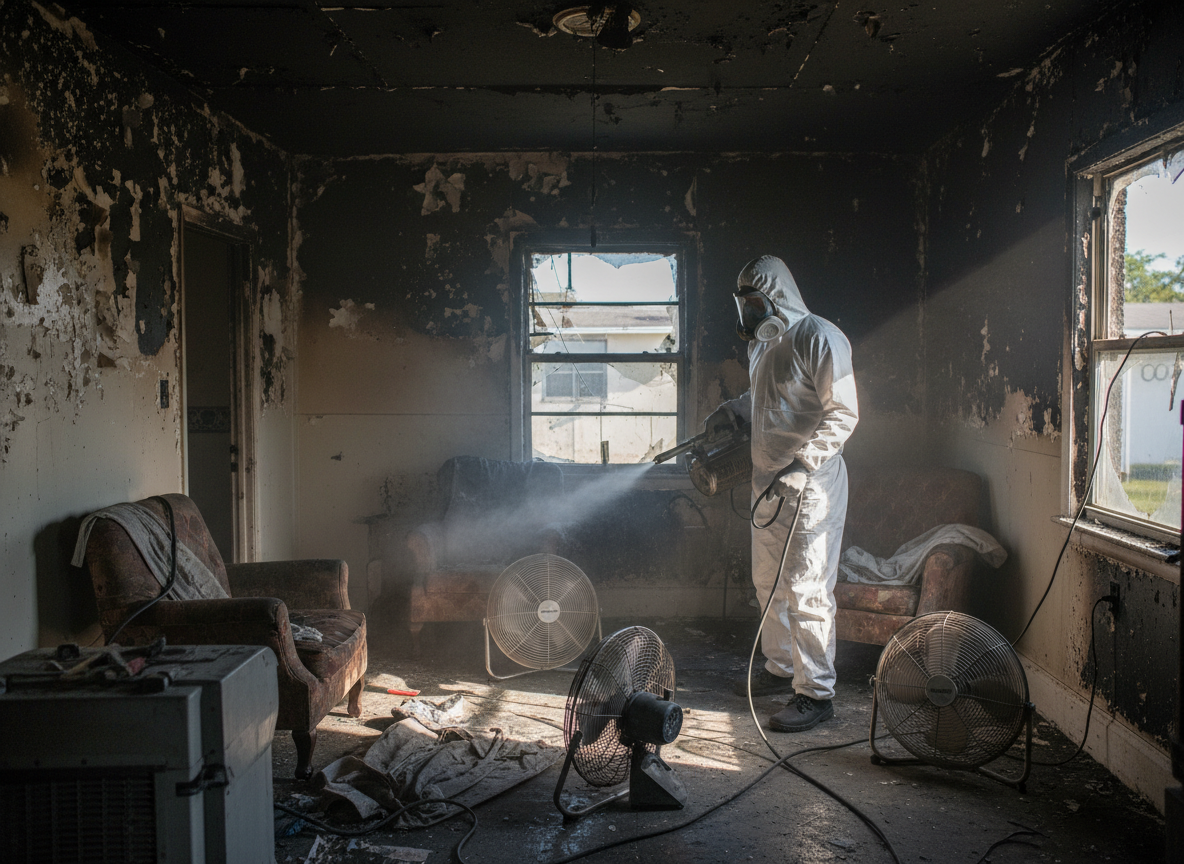
Smoke odor removal in Opa Locka requires addressing how soot penetrates porous materials common in older Miami-Dade housing stock, especially pre-1960s plaster and lath walls found throughout the Opa-locka Historic District. High humidity from the tropical monsoon climate keeps odor molecules suspended longer, so technicians must combine thermal fogging with hydroxyl generators rather than ozone alone, which can fail when moisture levels stay elevated year-round. Properties near Amelia Earhart Park or Opa-locka Airport often experience cross-ventilation patterns that push smoke into attic spaces and Magnolia Gardens bungalows, demanding full HVAC cleaning plus cavity access through strategic wall openings.
Technicians start by mapping smoke migration paths using moisture meters and borescopes, noting that concrete slab floors in many Opa Locka homes trap residues beneath baseboards. Sealing with odor-blocking primers rated for porous substrates follows deodorization, because residual proteins from burned synthetics reactivate in warm winter temperatures. Homeowners in Hialeah or Miami Lakes frequently overlook insulation in exterior walls, allowing odors to migrate into adjacent rooms months later when seasonal rains raise indoor humidity.
Edge cases include kitchens with grease fires where oils embed in cabinetry finishes, requiring disassembly rather than surface treatment. Code notes emphasize leaving electrical boxes accessible during cavity cleaning to avoid future inspection issues with Miami-Dade permitting. Never run ozone units in occupied spaces or near the Opa-locka City Hall vicinity without proper containment, as residual gas can affect neighboring properties.
Technician insight
In Opa Locka, the thing that catches most people out with Odor removal after fire is how the constant humidity in Miami-Dade keeps smoke proteins active inside the plaster walls of 1950s homes in the Historic District long after the fire is out; homeowners try running fans and it just pushes the smell into Magnolia Gardens next door.
Smoke Odor Lingering in Historic District Bungalow
A kitchen fire in an Opa-locka Historic District home sent smoke through shared attic spaces into two bedrooms. Inspection showed soot embedded in original plaster and insulation. Crew performed cavity cleaning, hydroxyl treatment calibrated for local humidity, and sealed surfaces. Odors cleared without reactivation after subsequent rains.
How it works
- 1
Initial Assessment and Containment
Inspect all affected rooms, identify smoke paths through attics and HVAC, and set up negative air to prevent cross-contamination in attached Opa Locka homes.
- 2
Source Removal and Cleaning
Remove charred debris, HEPA vacuum surfaces, and clean HVAC ducts and insulation where soot has settled in older wall cavities.
- 3
Deodorization Application
Apply thermal fogging or hydroxyl treatment calibrated for high-humidity conditions, then seal remaining porous materials with appropriate blockers.
- 4
Verification and Clearance
Test air quality and surfaces for residual odors, reopen contained areas, and advise on follow-up checks after the next heavy rain.
Pricing
Cost depends on square footage affected, depth of smoke penetration into walls and insulation, and whether HVAC systems require disassembly.