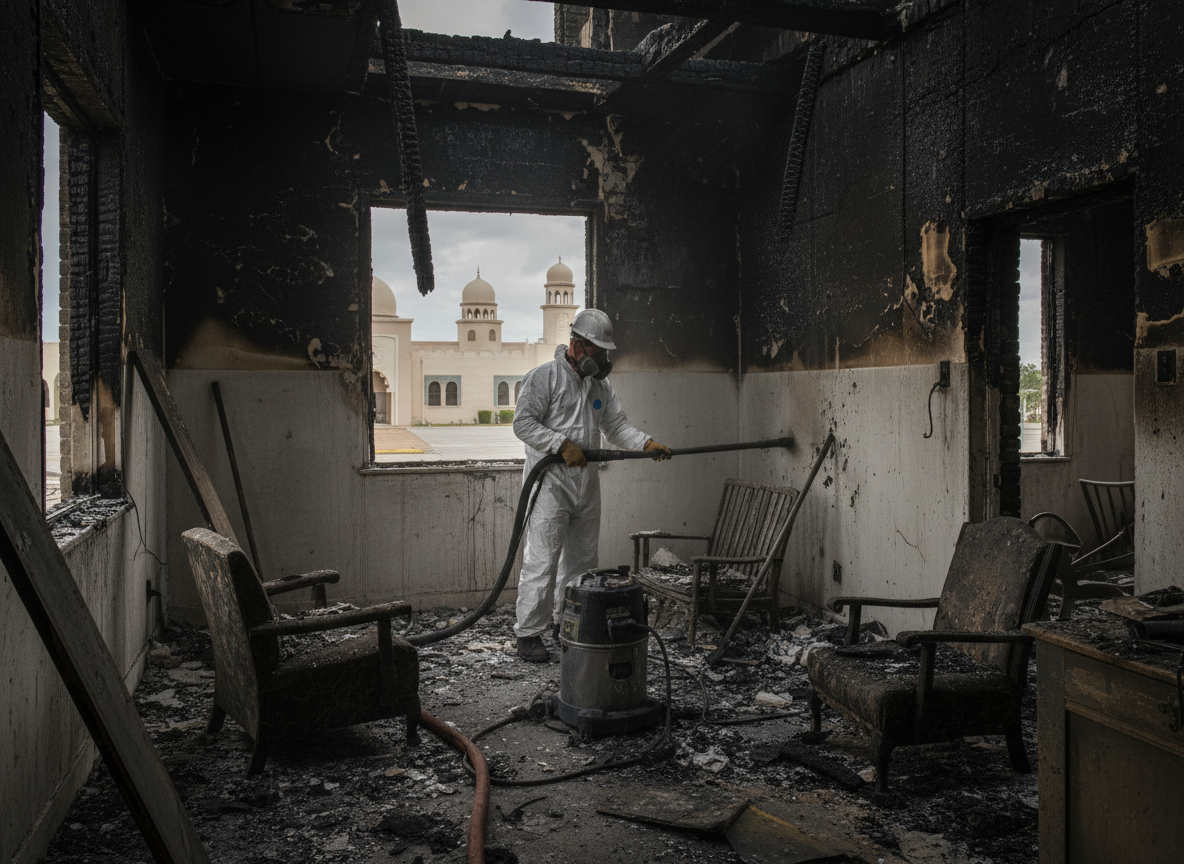
Opa Locka’s tropical monsoon climate brings high humidity year-round that complicates fire damage cleanup. Soot and smoke residues bond more aggressively to surfaces in warm, moist air, especially inside older masonry and wood-frame homes common in the Opa-locka Historic District and Magnolia Gardens. Technicians must neutralize acidic residues quickly before they etch metal fixtures, HVAC coils, and electrical boxes that are already stressed by decades of salt-laden air from nearby coastal breezes. Failure to address hidden pockets of soot behind baseboards or inside ductwork often leads to recurring odors and corrosion weeks after the initial event.
Cleanup crews working near Opa-locka Airport and Opa-locka City Hall routinely encounter properties with mixed construction eras. Pre-1960 homes frequently contain plaster walls and knob-and-tube wiring that trap fine particulate deeper than modern drywall. In these structures, dry-ice blasting or specialized HEPA vacuuming is required rather than standard wiping to avoid damaging fragile surfaces. Miami-Dade building codes also require proper disposal of contaminated insulation and verification that no residual smoke has entered shared walls in attached units common around Magnolia Gardens.
Seasonal humidity spikes after summer storms can turn residual soot into a breeding ground for mold if cleanup is delayed even a few days. Properties backing up to Amelia Earhart Park often sit on slightly lower terrain where poor drainage keeps crawl spaces damp, forcing crews to run industrial dehumidifiers longer and monitor moisture readings in joists and subfloors. This extra step prevents secondary damage that insurance adjusters frequently dispute if not documented with daily logs.
Coordination with nearby Miami, Hialeah, and Miami Lakes fire departments means crews sometimes arrive while overhaul is still underway. Immediate boarding and tarping of roofs prevents additional rain intrusion during the region’s frequent afternoon thunderstorms, a detail that protects both the structure and any salvageable contents before full cleaning begins.
Technician insight
In Opa Locka, the thing that catches most people out with Fire damage clean up is how quickly our tropical humidity turns light soot into corrosive sludge inside wall cavities of 1950s homes around the Opa-locka Historic District. Homeowners often start wiping surfaces themselves, pushing acidic residue deeper into plaster and wiring before we arrive.
Smoke migration through shared walls
A kitchen fire in a Magnolia Gardens duplex sent smoke into the attached unit through shared ductwork. We found heavy soot coating inside the neighbor’s HVAC and behind baseboards. Containment, HEPA vacuuming of ducts, and targeted neutralization cleared residues without disturbing original plaster finishes. The homeowner returned to a residue-free home within four days.
How it works
- 1
Initial Assessment
Technicians document all affected areas, test for hidden smoke migration, and note construction type and moisture levels.
- 2
Containment and Safety
Negative air machines and plastic barriers isolate the work zone while crews remove hazardous debris and secure the structure.
- 3
Soot and Residue Removal
Specialized equipment extracts acidic soot from surfaces, ducts, and cavities without spreading particles further into the home.
- 4
Odor Neutralization and Drying
Thermal fogging, ozone, or hydroxyl generators eliminate odors while dehumidifiers and air movers address humidity-driven secondary issues.
- 5
Final Verification
Post-cleaning inspection confirms surfaces are residue-free and moisture readings meet industry standards before contents are returned.
Pricing
Pricing varies by fire size, affected square footage, and construction type; upfront quotes follow on-site inspection.