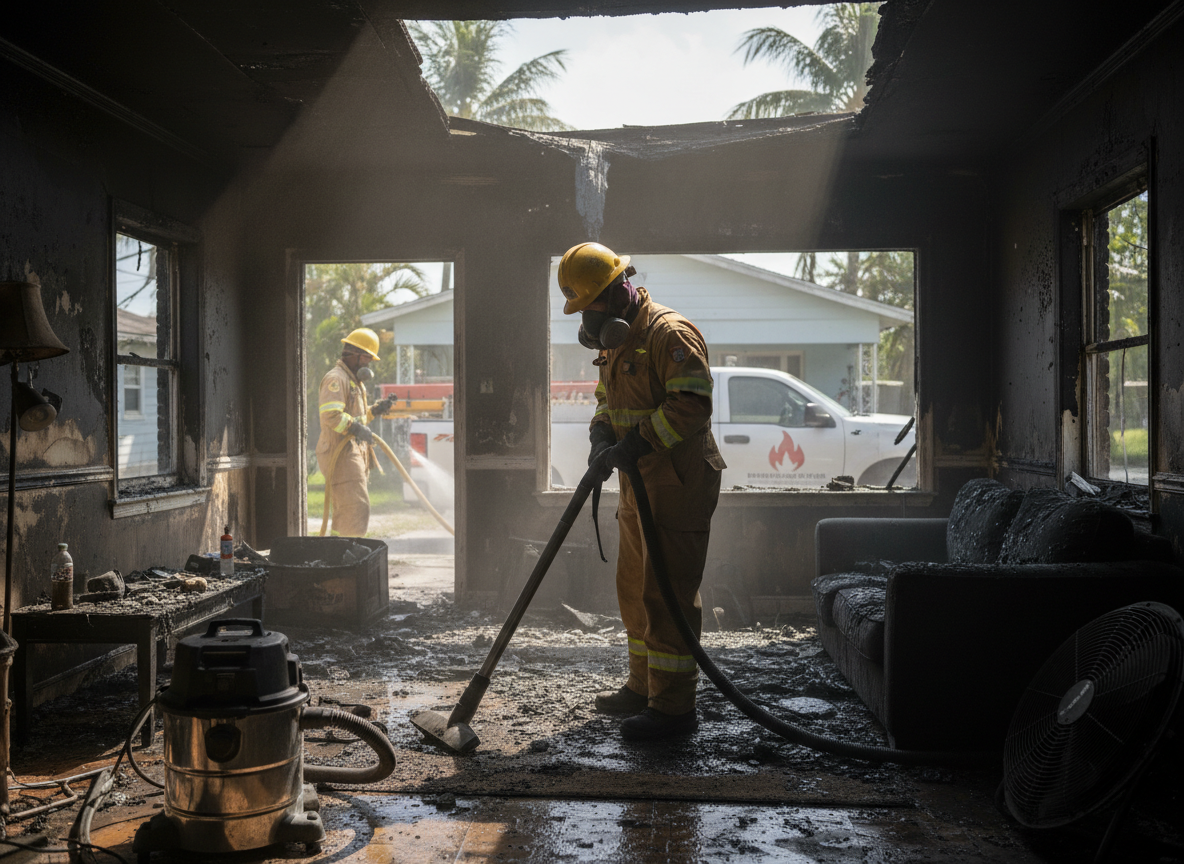
Opa Locka homes built before 1960 in the Historic District often feature plaster walls and older wiring that complicate soot penetration after a fire. In Miami-Dade County's tropical monsoon climate, high humidity during warm winters and hot summers causes smoke residue to bond quickly to surfaces and foster secondary mold growth within days. Technicians must use specialized HEPA filtration and antimicrobial treatments immediately to prevent odor migration into HVAC systems common in Magnolia Gardens properties.
Fires near Opa-locka Airport or Amelia Earhart Park frequently involve vehicles or outbuildings with petroleum-based materials that produce oily soot requiring solvent-based cleaners rather than standard water methods. Crews assess load-bearing walls in single-story concrete block homes prevalent around Opa-locka City Hall, noting that salt air from nearby coastal influences can accelerate corrosion on exposed metal after water suppression. Containment barriers and negative air machines are essential to avoid cross-contamination into adjacent units in densely packed neighborhoods.
Emergency response teams prioritize electrical safety checks first because Miami-Dade building codes require permits for any rewiring after fire damage. In Hialeah and Miami Lakes border areas, older roof structures with asphalt shingles trap heat and smoke, demanding targeted thermal imaging before drywall removal. Delaying extraction of charred debris allows humidity to turn ash into a sticky paste that stains concrete slabs permanently.
Coordination with local utilities in Opa Locka ensures gas and power shutoffs before entry, especially during summer storms that can reignite hidden embers. Restoration crews document every step for insurance adjusters serving Miami-Dade, focusing on contents cleaning for items stored in garages exposed to the area's frequent afternoon rains.
Technician insight
In Opa Locka, the thing that catches most people out with Emergency fire damage restoration is how the tropical humidity turns light smoke film into a bonded layer on plaster walls within 48 hours, especially in pre-1960 homes around the Historic District. Homeowners often try wiping surfaces themselves and drive the residue deeper into porous materials common near Amelia Earhart Park. We always start with moisture mapping because the warm winters keep everything damp enough for hidden mold to follow the smoke path into attics.
Kitchen fire in Magnolia Gardens home
A cooking fire spread soot through the kitchen and into the central air handler of a 1950s concrete block house. We found oily residue coating the ducts and settling on walls due to the area's high humidity. Negative air machines and solvent cleaning removed the film, followed by targeted drying and odor treatment. The home passed clearance testing and was returned to use without lingering smells.
How it works
- 1
Initial Assessment
Arrive on site within hours, secure the property, and document all fire, smoke, and water damage using photos and notes tailored to Opa Locka structures.
- 2
Safety and Containment
Shut off utilities, set up negative air pressure, and prevent soot spread into unaffected areas of homes near Magnolia Gardens or the Historic District.
- 3
Soot and Debris Removal
Extract charred materials and clean surfaces with appropriate agents, accounting for humidity-driven adhesion common in Miami-Dade's climate.
- 4
Odor Neutralization and Drying
Apply ozone or hydroxyl treatments and dehumidify to counter the warm, moist conditions that trap smoke smells in older plaster and insulation.
- 5
Final Inspection and Repairs
Verify clearance with testing, then coordinate permitted rebuilds while keeping the address at 13449 NW 42nd Ave as the 24/7 contact point.
Pricing
Pricing varies by fire size, affected square footage, and extent of smoke migration into HVAC or insulation; upfront written estimates provided before work begins.