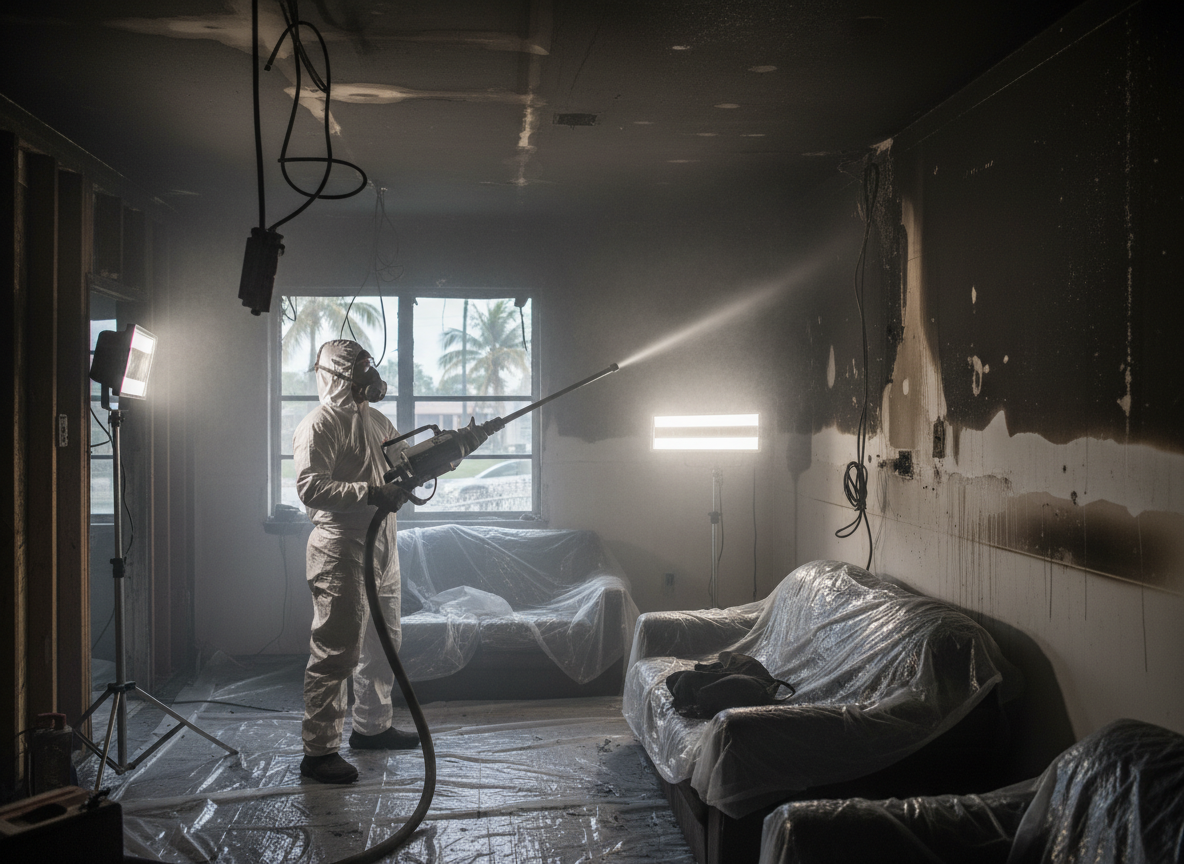
Smoke from structure fires in Opa Locka often penetrates porous materials like plaster walls and older wood framing found throughout the Opa-locka Historic District. High humidity from the tropical monsoon climate causes smoke particles to bond tightly to surfaces, creating persistent odors that standard cleaning cannot remove. Technicians must test for hidden residues behind baseboards and in HVAC systems common in homes near Amelia Earhart Park before any restoration begins.
In Magnolia Gardens and areas close to Opa-locka City Hall, many properties built before modern fire codes contain layered insulation and textured ceilings that trap soot deeply. Warm winter temperatures keep windows closed longer, allowing smoke to circulate through entire structures and settle in attics. Proper containment with negative air machines prevents cross-contamination to unaffected rooms during the cleaning process.
Odor neutralization requires pairing thermal fogging with hydroxyl generators suited to Miami-Dade humidity levels rather than ozone alone, which can damage certain fabrics. Crews also inspect ductwork connected to Opa Locka Airport flight paths where vibration may have loosened settled particles. Final clearance testing confirms no residual VOCs remain before homeowners return.
Technician insight
In Opa Locka the thing that catches most people out with smoke remediation is how our warm humid winters let smoke settle into the plaster and lath of pre-1950 homes in the Opa-locka Historic District. Homeowners often try to paint over it only to watch the odor return the first time the AC runs.
Historic District Smoke Residue
A kitchen fire in an older Opa-locka home sent smoke through plaster walls into adjacent bedrooms. We found heavy soot inside HVAC returns and attic insulation. Containment, surface cleaning, and targeted fogging cleared the residues without disturbing original woodwork. Air tests passed and the family moved back in within four days.
How it works
- 1
Initial Assessment
Technicians inspect all affected rooms, test surfaces for pH levels, and map smoke migration paths through the property.
- 2
Containment Setup
Plastic barriers and negative air units isolate the work zone to stop soot from spreading to clean areas.
- 3
Residue Removal
HEPA vacuums and specialized sponges clean hard surfaces while porous materials are evaluated for possible removal.
- 4
Odor Neutralization
Thermal fogging and air scrubbers treat remaining odors, followed by HVAC cleaning to clear ducts.
- 5
Verification
Air quality readings and surface tests confirm the space meets clearance standards before reoccupancy.
Pricing
Costs depend on square footage affected, depth of smoke penetration into older building materials, and whether HVAC systems require full cleaning.