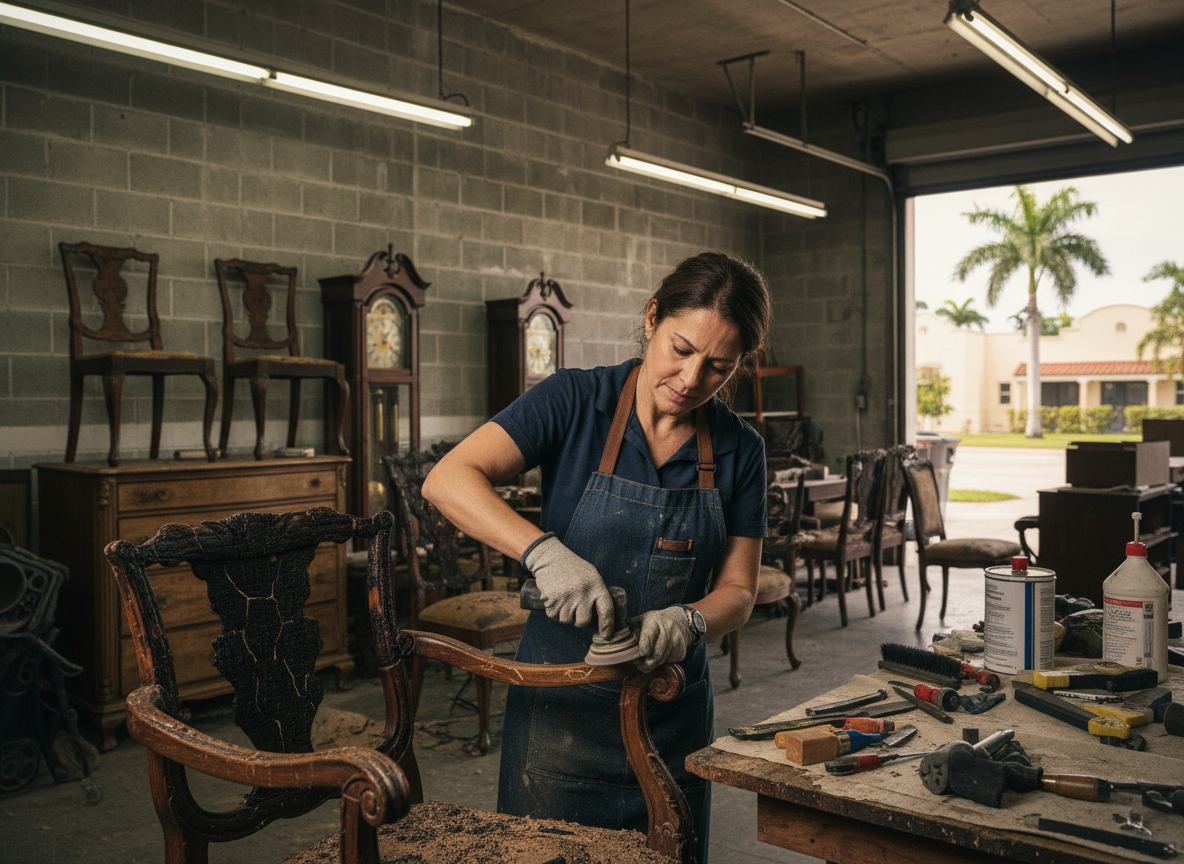
Fire-damaged furniture restoration in Opa Locka requires careful assessment of materials like oak, mahogany, and upholstered pieces common in older homes around the Opa-locka Historic District. Smoke penetration varies by wood density and finish, while the area's tropical monsoon climate with hot humid summers accelerates corrosion on metal hardware and promotes mold in fabric if not addressed within days. Technicians at our 13449 NW 42nd Ave location work 24/7 to stabilize items before secondary damage sets in from Miami-Dade's warm winters that rarely drop low enough to halt microbial growth.
Edge cases often involve pieces exposed to both direct flame and water from suppression efforts near Opa-locka Airport or Amelia Earhart Park neighborhoods. Soot on lacquered surfaces can etch permanently if cleaned with the wrong solvents, and layered smoke residues from kitchen fires in Magnolia Gardens homes demand sequential pH-neutral washes followed by odor neutralization. Local housing stock from the mid-20th century frequently includes particleboard that swells irreversibly once saturated, forcing decisions between partial salvage and full replacement before humidity reintroduces odors.
Regulation notes include following Miami-Dade environmental guidelines for disposal of heavily contaminated upholstery to avoid landfill issues. Homeowners near Opa-locka City Hall or commuting from Hialeah and Miami Lakes should expect on-site evaluation of airflow patterns in single-story concrete block homes that trap heat and particulates differently than newer construction in Miami Lakes.
Technician insight
In Opa Locka, the thing that catches most people out with fire-damaged furniture restoration is how quickly our humid summers turn light smoke film into embedded mold inside dresser drawers and sofa frames made from older particleboard common in Magnolia Gardens homes. Homeowners wait too long thinking the piece is dry because winters stay warm, then the odor returns the moment humidity spikes again near the airport.
Historic District Dresser Salvage
A mahogany dresser in an Opa-locka Historic District home absorbed heavy smoke from a kitchen fire. We found water trapped in the drawer bottoms and active mold starting on the back panels due to recent humidity. After stabilization at our facility, sequential cleaning, and refinishing, the piece returned usable with original hardware intact.
How it works
- 1
Initial Assessment
Inspect each piece for structural integrity, smoke depth, and water exposure while documenting materials and construction details on site in Opa Locka.
- 2
Stabilization
Move items to controlled drying environments at our NW 42nd Ave facility to halt humidity-driven mold growth common in Miami-Dade summers.
- 3
Cleaning and Odor Removal
Apply sequential solvent and neutralization treatments matched to wood, fabric, or composite surfaces without causing additional etching.
- 4
Refinishing and Reassembly
Restore finishes, replace hardware where needed, and reassemble before returning pieces to the original Opa Locka property.
Pricing
Costs depend on furniture type, damage extent, and whether humidity has already triggered secondary mold issues.