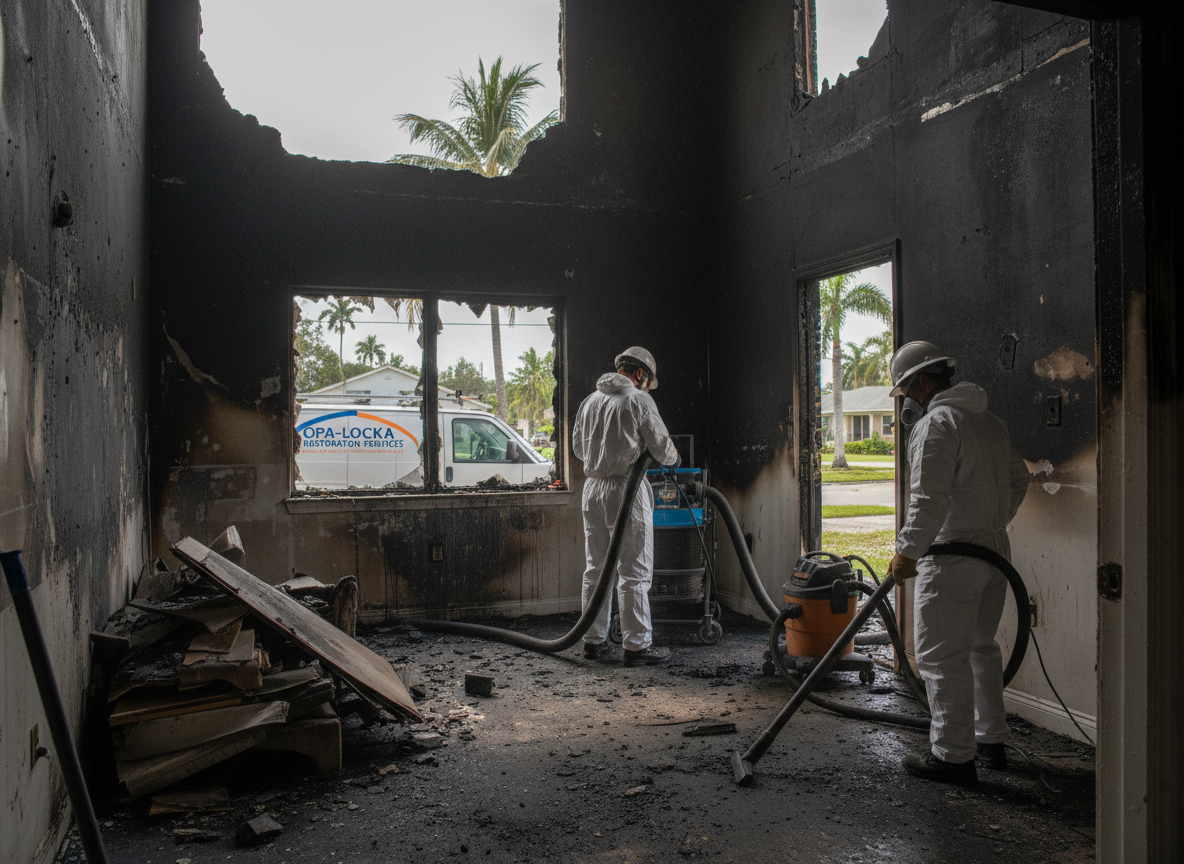
Opa Locka sits in Miami-Dade with a tropical monsoon climate that brings heavy humidity year-round. After a fire, that moisture slows drying and lets smoke residues sink deeper into older wood framing common in the Opa-locka Historic District and Magnolia Gardens neighborhoods. Crews must pull baseboards and open wall cavities early to prevent hidden corrosion on metal lath and electrical boxes.
Homes near Opa-locka City Hall and Amelia Earhart Park often feature 1950s-1970s construction with plaster over concrete block. Soot travels through shared attic spaces and HVAC ducts into neighboring units, so containment barriers and negative-air machines are set before any cleaning starts. Airport traffic at Opa-locka Airport adds constant dust that mixes with char and requires extra HEPA filtration steps.
Nearby Miami, Hialeah, and Miami Lakes share the same warm winters that keep restoration crews working without freeze protection, but summer rains can flood tarped roofs within hours. Technicians stage dehumidifiers and air movers the same day to stay ahead of mold growth in the humid air. Every job begins with a room-by-room inventory so owners know exactly which contents survived versus what must be discarded.
Technician insight
In Opa Locka, the thing that catches most people out with fire damage restoration near me is how quickly the tropical humidity re-wets soot inside the concrete-block walls common around Magnolia Gardens. Homeowners often skip pulling baseboards early, then wonder why the smell returns two weeks later when summer rains hit.
Kitchen fire spreads into attic near Amelia Earhart Park
Smoke traveled through the shared attic of a 1960s block home. We found heavy char on rafters and soot inside the HVAC trunk line serving two bedrooms. Crews contained the attic, cleaned ducts, dried the plaster ceilings, and restored airflow without replacing the entire system.
How it works
- 1
Emergency Board-Up And Site Assessment
Arrive within hours, secure openings, and document all affected rooms with photos before any work begins.
- 2
Soot And Smoke Residue Removal
Use HEPA vacuums, chemical sponges, and air scrubbers on walls, ceilings, and HVAC systems throughout the property.
- 3
Structural Drying And Odor Neutralization
Deploy industrial dehumidifiers and hydroxyl generators while monitoring moisture levels in concrete block and wood framing.
- 4
Repairs And Final Clearance
Replace damaged drywall and trim, repaint with odor-sealing primer, and walk through with the homeowner for sign-off.
Pricing
Upfront written quotes after on-site inspection; final cost depends on square footage affected, materials involved, and time required for odor removal.