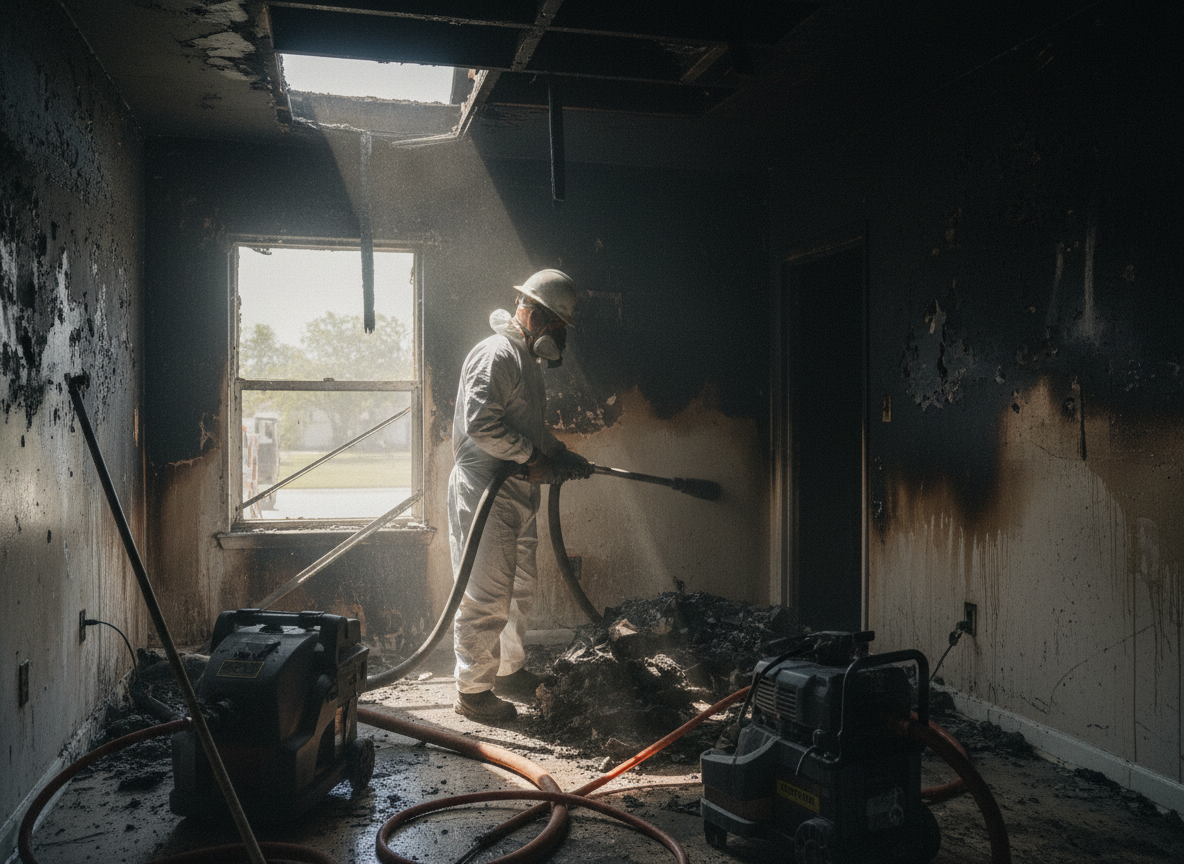
Opa Locka’s older housing stock in the Opa-locka Historic District and Magnolia Gardens often features plaster walls, lath, and aged HVAC systems that trap smoke particulates differently than newer construction in nearby Hialeah or Miami Lakes. After a fire, the tropical monsoon climate’s high humidity accelerates corrosion on metal surfaces and drives soot deeper into porous materials before crews arrive. Firefighting water combined with warm winter nights creates hidden moisture pockets under floors and in attics that must be mapped with moisture meters rather than visual checks alone.
Restoration crews working near Opa-locka Airport and Opa-locka City Hall routinely encounter properties with mixed electrical systems from multiple decades of renovations. These require careful isolation of circuits before any cleaning begins to avoid arc faults when power is restored. Smoke odor removal in these homes frequently demands both thermal fogging and hydroxyl generators because standard ozone units can damage the historic finishes still present in many blocks.
Miami-Dade permitting rules for structural repairs after fire events add steps that are not present in less regulated counties. Any load-bearing member affected by heat must be evaluated before drywall or insulation replacement proceeds, and documentation must be kept for the building department. Crews also watch for secondary water intrusion from the frequent afternoon storms that can re-wet cleaned surfaces if tarping is not completed the same day.
Technician insight
In Opa Locka, the thing that catches most people out with fire and smoke damage restoration is how quickly the humidity here sets smoke into the plaster and lathe of pre-1960 homes around the historic district. Firefighting water then sits under those layers and, with our warm nights, turns into hidden mold within days if crews do not pull baseboards and run drying equipment the same afternoon.
Smoke and Water Damage After Kitchen Fire
A homeowner in Magnolia Gardens called after a stovetop fire spread smoke through the single-story home. Inspection showed heavy soot on ceilings and water trapped under the kitchen subfloor. Crews isolated the HVAC, used negative air during cleaning, and ran drying equipment for four days before replacing affected drywall. The family returned without lingering odor.
How it works
- 1
Emergency Assessment
Technicians arrive within hours, document all affected rooms, and test for hidden moisture and structural compromise.
- 2
Containment and Safety
Negative air machines and physical barriers isolate the work zone to prevent soot migration into unaffected areas of the home.
- 3
Cleaning and Odor Removal
HEPA vacuuming, chemical sponges, and thermal fogging address surfaces and air while humidity is controlled to stop re-soiling.
- 4
Drying and Restoration
Industrial dehumidifiers and air movers dry the structure, followed by replacement of damaged materials and final odor verification.
Pricing
Upfront quotes are provided after inspection; costs depend on square footage affected, materials involved, and whether structural repairs are required.