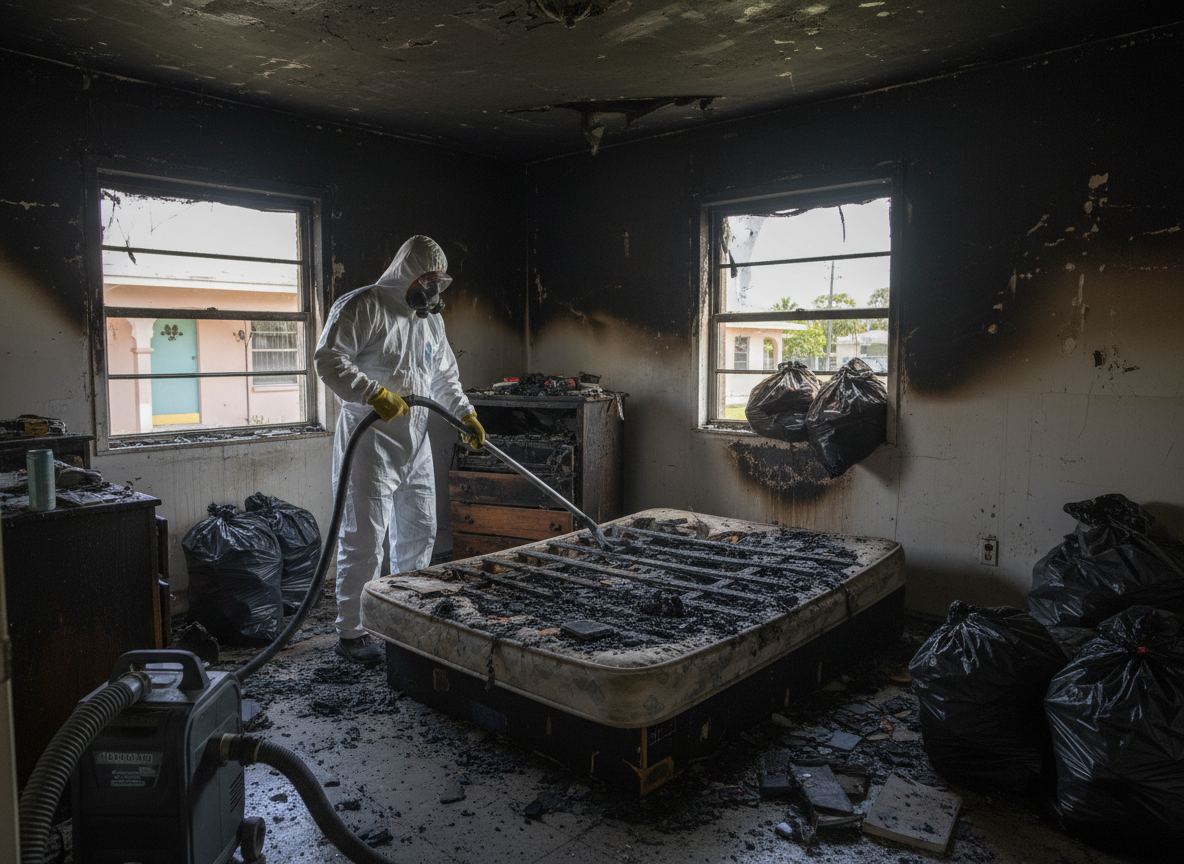
Opa Locka’s pre-1960 wood-frame homes in the Opa-locka Historic District and Magnolia Gardens trap smoke deep into plaster and lath when a bedroom fire occurs. Hot humid summers accelerate corrosion on metal fixtures and turn acidic soot into a sticky film that reappears on walls weeks later if not neutralized. Technicians must remove and bag every fabric item before starting HEPA vacuuming because the county’s tropical monsoon pattern keeps indoor humidity above 70 percent most months.
Near Opa-locka Airport and Amelia Earhart Park, jet-fuel odors from aircraft can mix with household smoke, creating a layered residue that standard cleaners miss. Crews use pH-specific detergents on hardwood floors common in these neighborhoods and seal subfloors to prevent odor migration into living spaces below. Miami-Dade building codes require permits for any electrical rewire after fire, so the team coordinates directly with inspectors to avoid delays on bedroom circuit repairs.
Homes bordering Hialeah and Miami Lakes often share walls or close setbacks, allowing smoke to travel through attic spaces into adjacent bedrooms. Containment barriers and negative-air machines are set before demolition to keep particles from reaching Opa-locka City Hall area properties. Final clearance testing includes surface and air sampling because residual odors return quickly once the air-conditioning cycles on in warm weather.
Technician insight
In Opa Locka, the thing that catches most people out with Bedroom fire damage cleanup is how the year-round humidity turns light smoke film on baseboards into a mold trigger inside the older lath-and-plaster walls around Magnolia Gardens; if you skip the pH wash and sealer step the smell comes back the first time the AC kicks on.
Bedroom fire near Opa-locka Airport
A bedroom fire in a 1950s home left soot throughout the attic shared with neighboring units. We found jet-fuel-tinged residue mixed with household smoke on rafters. Negative air and targeted cleaning removed the layered odor; the homeowner moved back in after clearance testing passed.
How it works
- 1
On-Site Assessment
Inspect all surfaces, HVAC returns and attic spaces for smoke migration while documenting affected materials.
- 2
Containment And Air Scrubbing
Erect plastic barriers and run HEPA air scrubbers to capture airborne particles before removal begins.
- 3
Soot Removal And Cleaning
Apply pH-adjusted cleaners to walls, ceilings and floors, then bag and remove all porous items.
- 4
Odor Neutralization And Sealing
Treat remaining surfaces with odor counteractants and apply sealers where needed before reconstruction.
Pricing
Upfront quote after inspection; cost driven by square footage, smoke penetration depth and whether HVAC or attic cleaning is required.