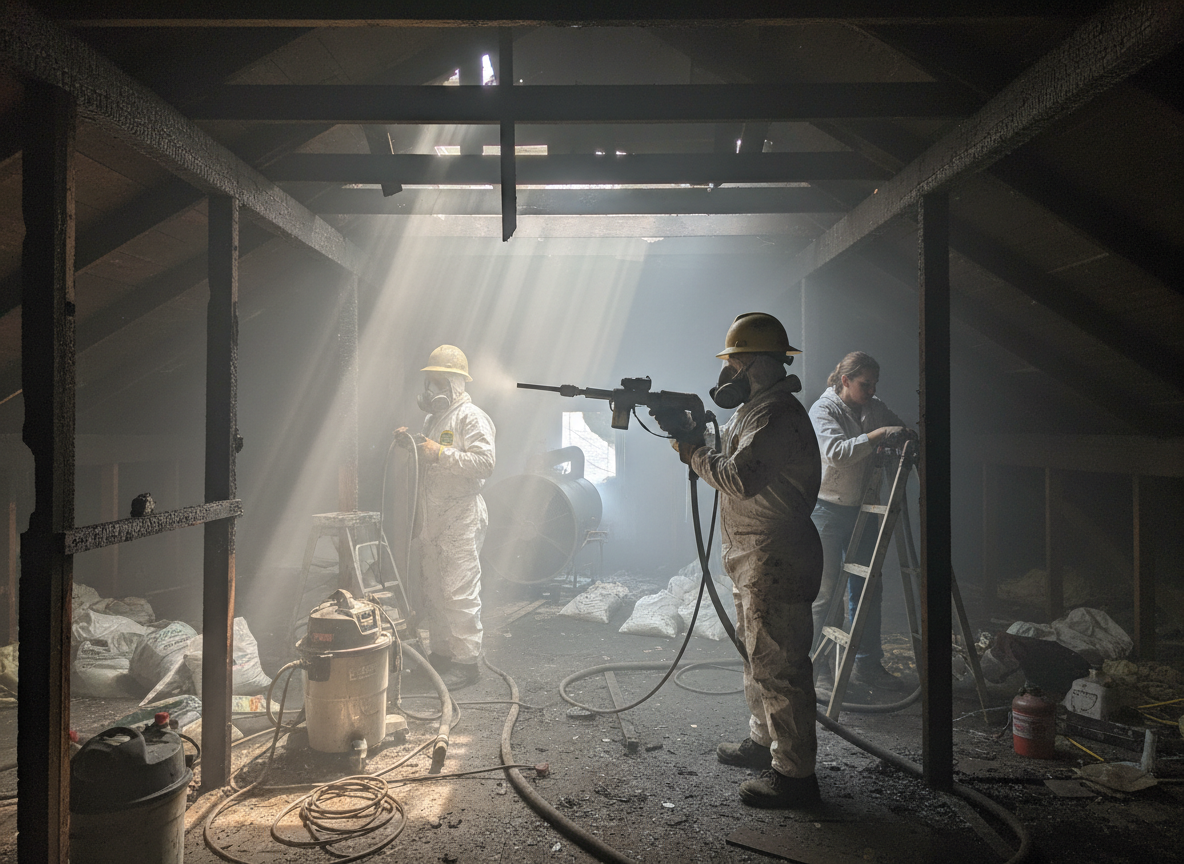
Attic fires in Opa Locka often start from overloaded wiring in homes built before modern Miami-Dade electrical codes, especially in the Opa-locka Historic District where many structures date to the 1920s and 1950s. Soot travels through open rafters and settles into fiberglass batts or blown cellulose insulation common here, then bonds with the high humidity that arrives with tropical monsoon summers. Technicians must remove and dispose of contaminated insulation while protecting the plaster or drywall ceilings below, because trapped moisture from warm winters can trigger hidden mold within days if ventilation is not restored immediately after cleaning.
Work near Amelia Earhart Park and Magnolia Gardens frequently involves single-story ranch homes with low-pitch roofs that trap heat and make negative-pressure containment harder to maintain. Crews set up containment at the access hatch, use HEPA air scrubbers rated for the fine carbon particles left by residential fires, and test surfaces with pH strips because alkaline soot etches metal fasteners and HVAC ducts. In Miami Lakes and Hialeah border properties, crews also coordinate with local building departments when rafter char requires sistering or when permits are needed for insulation replacement to meet current energy codes.
Technician insight
In Opa Locka, the thing that catches most people out with attic fire restoration is how the tropical monsoon humidity turns light soot into a mold trigger inside cellulose insulation within 48 hours if the attic is not fully dried after cleaning, especially in the older wood-framed homes around the Opa-locka Historic District.
Soot Migration in Magnolia Gardens Attic
An electrical fire in a 1950s Magnolia Gardens home sent smoke through the attic shared with neighboring units near Opa-locka City Hall. We found soot bonded to rafters and insulation that had absorbed moisture from recent warm weather. We removed the contaminated materials, cleaned all surfaces, and restored airflow before reinstalling insulation.
How it works
- 1
Initial Assessment
Technicians arrive 24/7 from the NW 42nd Ave location, document soot depth and structural char, and set up containment to prevent cross-contamination into living spaces.
- 2
Content and Insulation Removal
All affected insulation, stored items, and HVAC components are removed and disposed of following Miami-Dade waste guidelines while protecting intact ceiling planes.
- 3
Surface Cleaning
HEPA vacuuming and chemical sponges remove embedded soot from rafters, sheathing, and ducts; pH testing confirms neutralization before sealing.
- 4
Drying and Ventilation Restoration
Dehumidifiers and air movers address residual moisture from Opa Locka humidity, then soffit and ridge vents are cleared to prevent future mold in the restored attic.
- 5
Final Verification
Post-cleaning air sampling and visual inspection confirm the space meets clearance standards before insulation reinstallation.
Pricing
Pricing varies by attic size, depth of soot penetration, and whether older insulation types common in Opa Locka historic homes require full removal.